Wednesday, October 3, 2012

Making Soup


It may be 90 degrees, but my calendar says October and after smelling my "Leaves" oil from Bath and Body Works all day and seeing a million fall leaves photos on the Instagram, I'm in the autumn mood. So I'm going to make some soup, dammit.


This is one of our very favorite soups, so I wouldn't be surprised if I've already posted the recipe before (and I'm just lazy enough to not want to look). But believe me, this soup is worth multiple posts.

Bean and Bacon Soup

3-4 slices of bacon (or more, if you're so inclined. I'm inclined to use 9. So I do.)
1 onion, chopped
2-3 cloves of garlic, sliced.
a few carrots, sliced
a couple stalks of celery, sliced
16 oz vegetable broth (water works, too, if that's all you've got)
2 cans cannellini beans, rinsed and drained
salt and pepper
some chopped fresh parsley

Cook the bacon until crispy in a large pot, then remove. Using the bacon grease (unless that weirds you out -- you can drain the pot and use olive oil), saute the onion, garlic, carrot and celery until they begin to soften. Add broth and beans and simmer until the veg please you with their tenderness. While waiting for this to happen, eat a piece of bacon if you made a lot. Then, use a potato masher (or the back of a wooden spoon) to smash about half of the beans. Chop up the bacon and then toss in. Add salt and pepper to taste. Throw in some parsley for color and tastiness (yes, that's basil in my photo cause I had no parsley. Use your imagination).

I like to serve this with a chunk of sourdough bread, because that is a delicious combo. And, like most soups, this is even better the next day. I encourage you to make this sooner than later.

Friday, August 31, 2012

Iceland Again

We're in Iceland again! Blogging over HERE


Thursday, June 9, 2011

Jonathan Safran Foer Interview

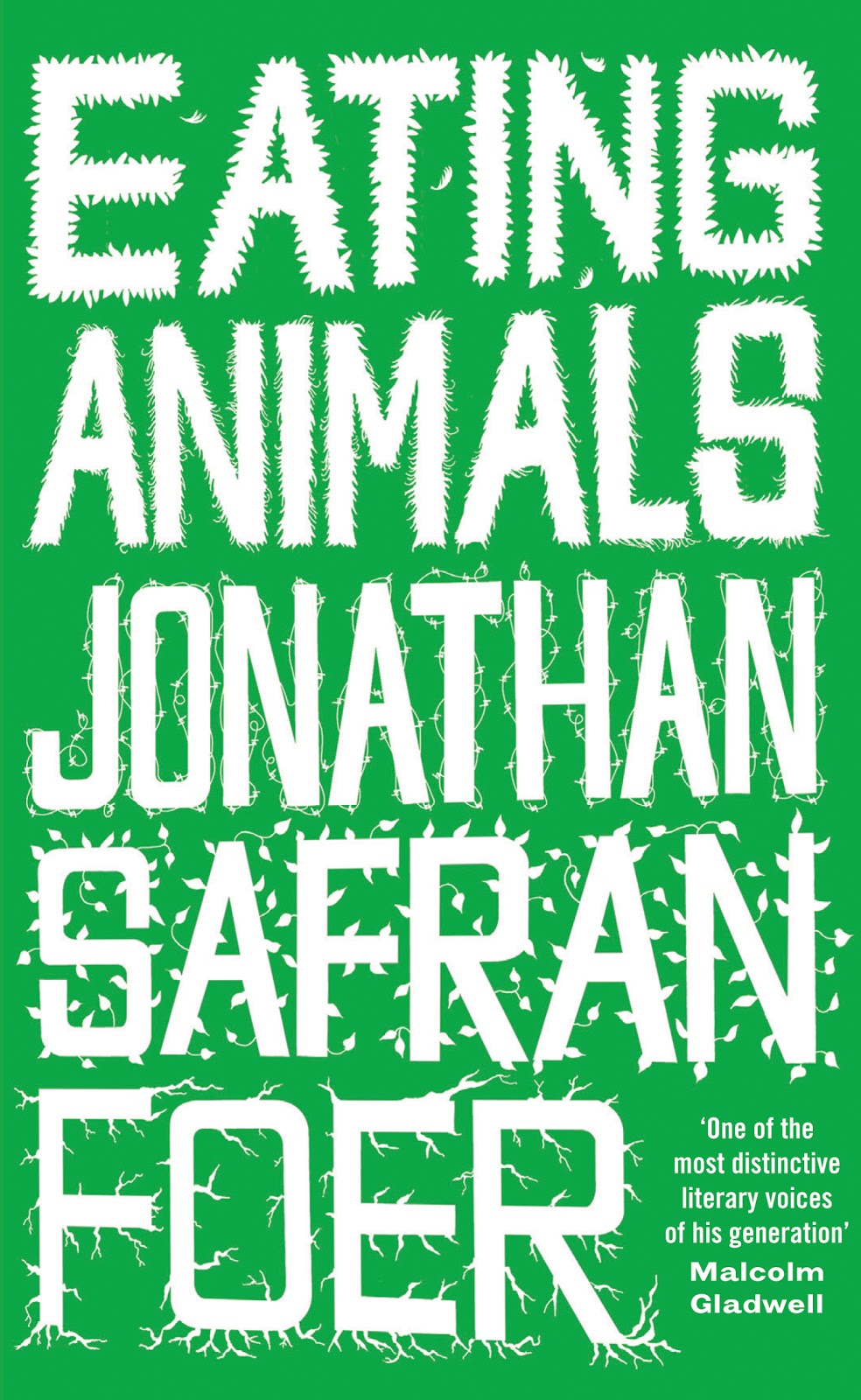
I love this interview with Jonathan Safran Foer about his book Eating Animals.


I especially like his point at the end that not everyone in the world needs to become a vegetarian. But the impact of eating less meat that we currently are -- even one more vegetarian meal per week -- would make a huge impact on the environment. That is definitely something everyone can do.

Saturday, April 2, 2011

Fried "Rice"

I'm all about the easiest food possible right now. Because I'm lazy.


olive oil
1 small onion, diced
some carrots, diced
6 stalks thin asparagus, cut into 1.5" pieces
1/2 cup frozen peas
2 eggs
2 cups cooked quinoa
soy sauce
salt
pepper
lemon juice

Heat olive oil over medium-heat in a large saute pan. Add onion and carrot and cook until softened. Add peas and asparagus. Stir around for a few minutes. Push everything to the side and crack two eggs into the clear space you just created. Sprinkle a bit of salt and pepper and then scramble. When the egg is cooked, combine with the veggies and add the cooked quinoa.

Sprinkle a tablespoon or so of soy sauce and a little squeeze of lemon over the whole mess and mix together. And more pepper. Cause I love pepper. So tasty.

Wednesday, March 30, 2011

Cheese Ravioli with Browned Butter and Sage Sauce

Hello, easiest dinner ever.


1 package of Trader Joe's cheese ravioli
3 Tablespoons butter
3 sage leaves
1/4 cup good Parmesan, grated

Cook ravioli according to package directions. While that's cooking, brown butter over medium-high heat. Add sage leaves. Reduce heat to low and stir around until ravioli is done cooking. Drain pasta (don't shake off all the water) and add to browned butter. Toss to coat. Add Parmesan and freshly ground black pepper.

I served along with a giant salad of romaine, oranges, shallots and parsley dressed with olive oil, white wine vinegar and white balsamic and a pinch of sea salt. Also, roasted broccoli with a squeeze of lemon and salt and pepper.

I wish I could just keep eating and eating.

Side note: I absolutely love finding little live critters in my produce. It's so exciting to me to see evidence that I'm eating REAL LIVING food instead of food that has not only grown in sterile soil, but been sprayed while it's growing and also irradiated when it's packaged. I'll raise the roof to that!

Saturday, March 5, 2011

Deodorant

Remember how I said I love making things myself instead of buying them? Well, I really mean it. I love being all "Damn the Man!" in absolutely as many things as possible.

I've been making my own deodorant for about 9 months now. I love knowing exactly what is in it, it's super cheap, and there's no wasteful packaging. Plus it works better than anything else I've ever used.


Just mix together:

1/4 cup baking soda
1/4 cup corn starch
4 Tablespoons coconut oil
a few drops of essential oil of your choice (optional)

You may need to soften the coconut oil a bit to be able to stir it up, but the melting point is only 76 degrees so it doesn't take much.

I store mine in a wee little 1/2 pint (I think that's the size?) canning jar and it works great. I've heard of people just reusing an old roll-up deodorant container, but my house is often too hot (over that 76 degree melting point) and it turns to liquid. So this screw cap jar works just perfectly no matter what the temperature. To apply, just rub your fingers in it a little and massage in.

The coconut oil smells deliciously coconut-y so no other scent is really needed but I've added orange and tea tree oil in separate batches just for fun. This is my third batch in 9 months, so it definitely lasts awhile. I should do the math and figure out how much a batch costs to compare to store-bought deodorant. But that would involve actually doing math. All I know is that it's CHEAP and you're using stuff you already have. Which is just awesome to me.

There are a lot of other recipes out there that include shea butter and other cool ingredients, but this is the one I tried since I didn't have to buy anything. And it worked, so I'm sticking with it.

Coming soon, some more cheap and natural hygiene products!

Friday, March 4, 2011

Tortilla Soup

This is one of our new favorites. I just made it up one night and it never ends up the same way since I've never even written it down until right now. But it's always good.


olive oil
1 onion, chopped
3 carrots, sliced
1 cup frozen corn
1 leek or some cabbage, chopped (optional, but I love cabbage in soup so I put it in whenever I can)
2 cans (or 3-4 cups) pinto beans
1 Tablespoon cilantro, chopped
salt
pepper
some cumin
some paprika
some garlic powder
some chili powder
1 quart vegetable stock

Saute the onion and carrot in a tablespoon or so of olive oil until they begin to soften. Then add the rest of the above ingredients. Let simmer for an 30-60 minutes until all vegetables are tender. Adjust seasonings as needed.

Serve with:
sour cream
tomato
avocado
crushed tortilla chips
more cilantro

Now, unfortunately, my photo up there is sadly lacking in a couple ingredients that make it most delicious: sour cream (I'm working on making my own. Yep, you heard me), avocado (Mine aren't ripe. Sad face) and I just forgot to add the chips before I took the photo and I'm too lazy to take another. But, it's still good.

If you wanted to add chicken you easily could. Maybe slow cook in a crock pot for a couple hours with the stock and then shred it up? I've never done it but it sounds viable and I'm sure you'll figure something out. :)

Thursday, March 3, 2011

Vegetable Broth

I have been working on some recipes but between being sick and then my mother-in-law being in town, not a lot of cooking was happening around here.

So, I figured I'd talk about making your own vegetable broth. Because I love it. And it's so easy and so superior to anything you can buy pre-packaged. And I feel so environmentally friendly when I make it myself.

All you have to do is save all of your leftover bits of veggies as you're cutting them up. Ends of carrots, skins of onions, leaves from celery, leek tops, ribs of kale, mushrooms stems, herbs, almost anything (except broccoli, cauliflower, potatoes, asparagus, artichokes). I collect all of these scraps in a plastic bag in the fridge. After about a week I have enough to make some stock.

Dump the scraps into a big stock pot and add water. I usually add about 2 quarts. Then, just simmer for a couple hours. I simmered mine today for too long without watching it and I lost about 1/2 of a quart of water (oops).


Then, strain the now-stock into jars and either refrigerate for a few days or store in plastic containers and freeze for a month or so.


I love using something that is usually regarded as "garbage" and making something amazing (it'd be even better if I had a compost pile that I could toss the veggies in after making stock). I also love not having to buy something from the store that I can make myself, and not having packaging to throw away. It's a win-win-win situation!

I'll be back with some incred soup recipes you can make using this vegetable stock.

Monday, February 21, 2011

Eating Animals Part Deux

My friend, Ruth, just finished reading Eating Animals and has written a great article on her blog about the book. It's much more complete and informative than my previous review. Please go check it out HERE.

Plus, here's a great video with the author Jonathan Safran Foer about the book. There are lots of interviews on YouTube with him that I loved watching. I love him!


I'll be back soon with some actual food posts!

Wednesday, February 16, 2011

Why Aren’t G.M.O. Foods Labeled?

Please read this excellent article on GMOs by Mark Bittman:

I am so frustrated about this whole issue. :(

Also, Mark Bittman has a book called How to Cook Everything Vegetarian that I can not wait to check out! I hope to do that soon and I'll report back with a review.

Monday, February 14, 2011

Quinoa With Roasted Veg


Now this is an especially bad photo, but it's of something incredibly delicious, so I'm going to pretend that makes up for it.

I had tons of root vegetables on hand one night and had to come up with something to do with them. And so I made this. And it was so tasty. It's a very loose recipe, you can do almost anything, but this is what I did:

Quinoa, cooked in salted water (follow package's directions)

Carrots
Turnips
Parsnips
Butternut squash
Red onion
Garlic
(You could also do potatoes or rutabaga. Basically anything you want to roast, I would think.)

Chop the veg into uniform pieces so they cook evenly. Toss to coat with olive oil, salt, pepper, rosemary or thyme or whatever your favorite herbs are. Roast for 30-45 minutes at 350 degrees.

Add a sprinkle of good parmesan and a tad bit of lemon juice to the quinoa and serve with the veggies. It is SO GOOD. And quinoa is a good source of protein, so bonus! You should probably serve this with a green salad with maybe a little cheese (feta would go great I think), but I was lazy that night and we just had this one dish. It's a favorite.

And a Happy Valentine's Day, if you celebrate that kind of thing. :)

Sunday, February 13, 2011

A Couple Favorite Blogs +

Delicious foods from Joan's on Third in LA. Spinach mushroom quiche, curried
chickpeas, farrow salad and a brussel sprout salad. It was off the hook!

Healthy Green Kitchen is one of my absolute favorites right now. I love that she includes so much information about nutrition along with lovely photos and recipes using homegrown and local ingredients. She also is mostly gluten-free. This endive and satsuma mandarin salad makes me so hungry! And, with my current quinoa obsession, this curried quinoa salad is something I must make asap.

I can't remember if I've shared this blog before (though I know many of you who read this blog found me through it) -- my friend Sheena is my hero. She blogs at In The Little Red House. She posts lots of great recipes and I especially like the series she's been doing right now about health and nutrition and how to start making changes in how we eat and feed our families. Go HERE to read all of her posts in the series so far. Plus, she's gorgeous, has the cutest family you've ever seen, and her photography is beautiful.

Lastly, I have to share some interesting things I've read lately. Saturday is the pick-up day for our CSA box and in the box is a weekly newsletter from the farmer who runs and set up our co-op. He's not much of a writer, but he is so knowledgeable and I always learn something from the newsletter. With the news of Supreme Court lifting the ban on genetically modified alfalfa (hay) recently, there's been a lot of talk again about how GMO crops are going to have an affect on the food industry. This is what Uncle Vern (our farmer -- haha!) had to say last week and this week about it:

"What they've been able to accomplish through gene splicing is phenomenal taken by itself. They an isolate a trait from one organism and splice it into the DNA of another. Not just within the same species but actually from animals or bacteria to plants or fish and vice versa. Now that's some crazy stuff right there.

There are tons of potential applications for this technology, but right now, the biggest inroads have come from DuPont, Syngenta and Monsanto in just a few basic areas; herbicide resistance, and pesticide production. Basically, they can create crops that make their own pesticide so when bugs eat em, they die, or, you can spry the field with a particular herbicide and the crop isn't affected, but the weeds die. I told you it was crazy.

Practically all the non organic corn, soybeans and cotton in the US have thus been modified, so, pretty much EVERYTHING you eat or drink that's processed and not 100% organic is made from GMO's, because practically EVERYTHING processed is made from or sweetened by GM corn or soy and of course all non-organic animals are fed GM corn and soy.

You've heard my story before of cocci (diarrhea) in our conventional chickens that never happened in the organic chickens and I believe in large part that's because the conventional chickens are fed GM corn and soy but it's only an observation from this farmer.

On the plus side, these traits initially reduce tillage costs and pesticide usage, making farmers more profitable. I have a good friend who's a career Monsanto guy. We have some healthy discussions as you might imagine and next week I'll share some of em with you..."

and from this week

"Our goal is to restore the connection to a healthy level again so we can be on the same team, working together to provide healthy food from California. Agriculture, not strip malls or Hollywood is still the largest industry in the golden state.

Remember, that it's quite rare that any one producer controls even 10% of any commodity. Farming is incredibly competitive at the production level. I can also tell you that at the production level, conventional or organic; you'll never find a more trustworthy group of business professionals than CA farmers. We are optimistic survivors.

Keep that in mind as we continue our talk on Genetically Modified Organisms (GMOs) because if given a chance, farmers will produce exactly what folks are willing to pay for (not what they say they're willing to pay for).

Okay, so genetic modification involves taking genes (not chromosomes) from one species and inserting them into another to create herbicide resistance for example so now a conventional farmer can spray the weeds and the corn with say Round-up and only the weeds die. That same corn can also make its own pesticide so that when the corn worm eat it, he dies. Now the conventional farmer doesn't have to spray for worms. When they put both traits into one plant like that it's called "staking". I ask my friend the Monsanto guy, "If you guys come-up with patented seed technology that will save a farmer $100.00 how much more will you charge for the seed?" His sheepish response was "$85 bucks."

My 1st point is this. If the argument is: we need to do this to remain economically competitive, how do we justify even the economics when only 15% is transferring to the bottom line. Here we are, messing around with nature, creating stuff that has natural barriers (normally you can't cross a firefly with a guppy etc.) and stealthily feeding it to Americans. Now fifteen dollars cannot be ignored by your average corn farmer playing his intense pennies game, but not even the economic benefits are aiding the farmer nor the consumer to any meaningful extent."

That's it for today. I promise less talk and more photos and recipes for yummy food soon.

Saturday, February 12, 2011

Eating Animals

Sorry for the long absence. But I'm back!

And the big news is...that I'm going vegetarian. The catalyst for this decision was primarily this book...


Eating Animals was written by one of my very favorite authors of all time (Extremely Loud & Incredibly Close, Everything Is Illuminated) and this was his first non-novel. His writing always touches me on an extremely deep level and this book was no exception. He explores the moral, environmental and social implications of eating factory farmed meat and by the end of it, I felt I could not justify being a part of it any longer.

One of the great things about this book is that it's not just a hard-sell for vegetarianism. Foer is not trying to scare you into not eating meat. He explores family farms quite extensively and completely supports what they're doing -- giving animals the best life possible and a humane death before being turned into food.

I recommend this book to anyone seriously researching where our food comes from. While most of the information regarding factory farming is not going to be new to anyone who's read anything by Michael Pollan, the moral and nearly spiritual reasons to not eat meat are presented in a way I had never considered. Add in the facts regarding the environmental havoc we're causing (particularly the fishing industry), and you're left with a lot to think about.

So, with all of that said, I'm back to blogging and will hopefully have lots of amazing vegetarian dishes to share with you as I continue my quest into eating healthfully and wholefully (that should so be a word). I'll apologize in advance for the quality of my photos -- I know we're all used to excellence around here. My husband has been doing it all for me, but the truth is, he's way too busy with actual things than being bothered by me about a silly blog. So as long as you're cool with that, I'll see you back here soon.

Cheers.

Friday, October 1, 2010

Chipotle Fundraiser


I just got an email from the Jamie Oliver mailing list and it had a link to info on this brilliant fundraiser from Chipotle: on Halloween, if you go to Chipotle dressed up as "a horrifying processed food product", you get a burrito for $2. Hilarious!

Read about it HERE...
What processed food product would you dress up as?

Thursday, September 30, 2010

Wandering


If you've been wondering where I've been...

We Do Iceland

Planning for the trip and then actually tripping have taken up pretty much all of my time the past few months.

I've got new posts coming soon though! In the meantime, go check out our photos of the most incredible place on Earth!

Friday, June 11, 2010

Biscuits


Biscuits are kind of a big deal in my family. Second only to pie. My grandma or my mom making biscuits for breakfast has always been a very exciting occasion. And sometimes an adventure when fighting over the last one with 5 younger siblings.

The legacy started with my Great-Grandma Sorenson who lived on a farm in a tiny little community in central Utah with her husband and two daughters. She would make lunch for Great-Grandpa and the other farmers who were working on their farm that day. She quickly became famous for her biscuits (and her pie...but that's another post) and the farmers would always look forward to working on the Sorenson farm so that they could eat her cooking.

A few months ago I decided that I too needed to acquire this biscuit making skill and tried out a couple of recipes. They were all failures. Or, maybe not failures, but they definitely did not compare to the legendary biscuits I had been raised on. So then I did what I should have done in the first place and consulted with my mom. All it took was one Skype video call, while both making biscuits at the same time, to learn the family secrets to incredibly high, flaky, fluffy biscuits. Which I will now unveil to you lucky readers. :)


Sorenson Girl Biscuits

2 cups all-purpose flour
1 tablespoon sugar
3 teaspoons baking powder
1 teaspoon salt
1/2 cup butter*
1 1/2** cups milk*** -- I usually use the buttermilk leftover from making butter

Heat oven to 450.

Mix flour, sugar, baking powder and salt together in a medium bowl.
Cut very cold butter (I usually use frozen) into 1/4" cubes and then,using a pastry blender, cut into flour until the mixture resembles fine crumbs (don't overwork -- you'll end up with flat biscuits).

On a sheet of wax paper (approximately 15" long) add a thick layer of flour (about 1/2 cup). Then, pour the milk into the bowl and mix until just barely moistened (it will be quite liquid-y). Pour batter out onto floured wax paper.

Add a sprinkling of flour on top of batter and pat out into a rectangle about 1/2" thick (your hands will get very messy). Then, using a side of the wax paper, flip the rectangle over onto itself and pat back out to 1/2" thickness. Repeat this process once more.

Then, using a biscuit cutter (or a small juice glass), cut out round pieces of dough and place so they are touching on a baking stone. You will cut out two circles for each biscuit and stack them.

Bake 10-12 minutes until golden brown. Serve warm with butter, honey, or jam. Or make a sausage biscuit with sausage and cheddar cheese.


Then, prepare for your mind to be blown. These things are -- not even exaggerating -- like crack to me. I can't stop. So, I always halve this recipe when making just for our family which yields about 5 biscuits. This way, I can only have two (when really, I want all 5). Growing up, my mom would double this recipe in order for everyone to get one with just a few leftover to fight over.

*Great-Grandma used straight cream skimmed from the top of their fresh milk. No wonder they were so good!

**This is the secret -- the liquid is double what is called for in other recipes. Also, the folding over. Some recipes call for kneading the dough which is just nuts because that makes a tough, not-flaky biscuit. Tough and non-flaky are not words that should ever be used in the same sentence as biscuit.

***If you want to use cultured buttermilk, decrease baking powder to 2 teaspoons and add 1/4 teaspoon baking soda. Cultured buttermilk is also a bit thicker than regular milk so add an extra tablespoon.

Thursday, June 10, 2010

Egg Bagels


My husband and my son are both bagel fans. Egg bagels, in particular. After years of buying Sara Lee Egg bagels I discovered, to my horror, that not only do they contain high fructose corn syrup but also Yellow #5. WHAT!? The HFCS is bad enough, but not a huge surprise. But food coloring in bread? Why? So that they look different than the plain bagels? Needless to say, I was disgusted.

Thus began my quest for a better bagel. The recipe I tried is from a blog called Brown Eyed Baker which I had not previously heard of but now enjoy quite a lot.

The bagels seemed a bit intimidating. Reading over the recipe, it seemed like there were a lot of steps and lots of things I'd never done before. Like, boiling dough. However, by just following directions (surprise!) I was able to produce some pretty tasty bagels, I must say! The only thing I will change next time I make these is boiling the dough longer. I did them for only 1 minute per side as the recipe advises, but they were not chewy enough for us. The 1 minute per side produced a bagel that was just barely different than a roll. So, 2 minutes or 2.5 per side is what we'll do next time.

Bagel making is quite magical actually. There's a step where you test the dough to find out if it's ready to be retarded (I guess to stop the rising?). You do this by dropping a raw bagel into a bowl of room temperature water to see if it floats. If it does, you put the bagels in the fridge overnight. If it does not float, you let them sit for a few more minutes and try again. I had try twice before it floated on the third try. Magic!

Also, I froze half the batch for a couple of weeks and they thawed perfectly. We eat don't eat food very quickly around here so I'm always stoked when I can freeze something successfully. Let me know if you try these out!

Wednesday, June 9, 2010

Pizza


Homemade pizza is probably our favorite food to make and eat. This is how we do it:

The Crust

We used to always use Trader Joe's pre-made pizza crust. It is tasty, contains very few ingredients and always turns out perfectly. Then, during my all-from-scratch-challenge in April, we tried out the Pioneer Woman's pizza crust recipe. It is so fast and easy and also has only 4 ingredients (not counting water). It has become my new standby.

The Sauce

Likewise, we also used to use the Trader Joe's pizza sauce. However, now I make up a batch of Jamie Oliver's tomato sauce which is the perfect amount for two pizzas PLUS pasta later in the week. The only changes I make from Jamie's recipe are not straining it (I like it more rustic and chunky) and I add a couple teaspoons of balsamic vinegar while it's simmering away. Amazing!

The Toppings

Some of our favorite combinations are:

Margarita - fresh mozzarella, basil, tomato (thinly sliced), garlic, salt, pepper, olive oil
Greek - mozzarella, feta, red onion, basil, kalamata olives (halved), oregano
Veggie - mushrooms, bell peppers, red onion, spinach
Pepperoni - Gourmet pepperoni from TJ, red pepper flakes, oregano
Sausage - spicy Italian sausage (removed from casing and cooked), green bell pepper, fresh tomato

The Technique

Pre-heat oven to 500 degrees, with pizza stone (a MUST) on very bottom shelf setting. Sprinkle flat cookie sheet or pizza peel with corn meal. Shape dough on lightly floured surface then transfer to cookie sheet. Throw the toppings on.

When oven has come to temperature, gently slide assembled pizza from sheet onto hot pizza stone (I leave the stone in the oven and just pull the shelf out). Bake for 8-11 minutes, until crust is golden and all cheese is melted.

Slide pizza from pan to cutting board and let cool for 5-10 minutes (this will help keep your toppings on the pizza when you cut).


Homemade pizza is SO much better than take-out. There is really no comparison. It's cheaper, fresher, better for you, tastier and fun to make! I would rather do the work to make it myself than buy it out any day. I think I'll make it tonight. :)

Tuesday, June 8, 2010

The Slow Cook

A new favorite blog -- The Slow Cook. This blog is written by Ed Bruske, a former reporter for the Washington Post who is now a personal chef, lecturer, and teacher. He and his family have turned their front yard into an urban vegetable garden and he records their gardening adventures along with some investigative journalism articles on school food and food industry issues. He also has lots of links to other good resources and videos.

I'm in the midst of reading "Tales from a D.C. School Kitchen" which are articles he wrote after spending a week in the kitchen of his daughter's elementary school.

You must go check out this blog -- so much great information! It's going to take some time to get through it all.

The Omnivore's Dilemna


Of all the food industry related books I've read over the past few months, I think this may be my favorite -- The Omnivore's Dilemma. It may have somewhat to do with my crush on Michael Pollan, but it really is an awesome book.

Pollan follows 4 different kinds of meals from the earth to the table -- industrial, big business organic, local organic and finally foraged. It is truly fascinating to see where our food is coming from and what impacts what food we eat has on the environment and our communities.

My favorite part of the book was when Pollan visits Joel Salatin's farm--Polyface Farms-- for a week. Salatin is one of the farmers that makes an appearance in the documentary Food, Inc, which is where I first heard of him. He is so passionate and quirky and just cracks me up. I mean, take a look at him. The perfect farmer!


If you only read one book on the topic, please read this one. My second favorite would be Real Food: What to Eat and Why by Nina Planck (my review HERE).